GuidesPractical guide

5 min readNew
Ofgem has set the cap for 1 January to 31 March 2027. Here is what it says, why regular meter readings matter more when rates change, and a simple routine for checking your own bill.
On 25 November 2026 Ofgem announced that the energy price cap will rise by 26% for 1 January to 31 March 2027. For a typical household paying by Direct Debit, the annualised figure goes from £1,723 to £2,166, if that level were sustained for a year. Ofgem puts the rise down to the continued conflict in the Middle East pushing up international gas prices. A higher unit rate makes every guess in your head more expensive, so this is a good week to start keeping your own meter readings and checking bills against them.
The cap limits the unit rates and daily standing charges that suppliers can charge on default tariffs. Ofgem's published averages for Direct Debit customers across England, Scotland and Wales are:
| 1 Oct to 31 Dec 2026 | 1 Jan to 31 Mar 2027 | |
|---|---|---|
| Electricity unit rate | 26.32p per kWh | 32.69p per kWh |
| Electricity standing charge | 54.83p per day | 54.77p per day |
| Gas unit rate | 7.97p per kWh | 10.96p per kWh |
| Gas standing charge | 29.68p per day | 29.65p per day |
Three points from Ofgem's own notes matter before you use these figures:
Ofgem also notes that the Government has announced around 20 million households will receive £100 towards their energy bill from January. Ofgem's own tips include checking whether a fixed tariff suits you, and switching to Direct Debit if you pay on receipt of a bill, which it says would save the average customer about £160 a year.
National Energy Action, the fuel poverty charity, reads the announcement much more bleakly. It says that once government support is counted, the new level is higher than the peak of the 2022 to 2023 energy crisis, and that households with prepayment meters in the least efficient homes could need around £1,000 to top up between January and March. That analysis is NEA's, built on its own assumptions about a home, so treat it as a warning about who is hit hardest rather than a forecast for your house.
Take a made-up month of 30 days with 250 kWh of electricity and 1,000 kWh of gas, using Ofgem's average Direct Debit rates above.
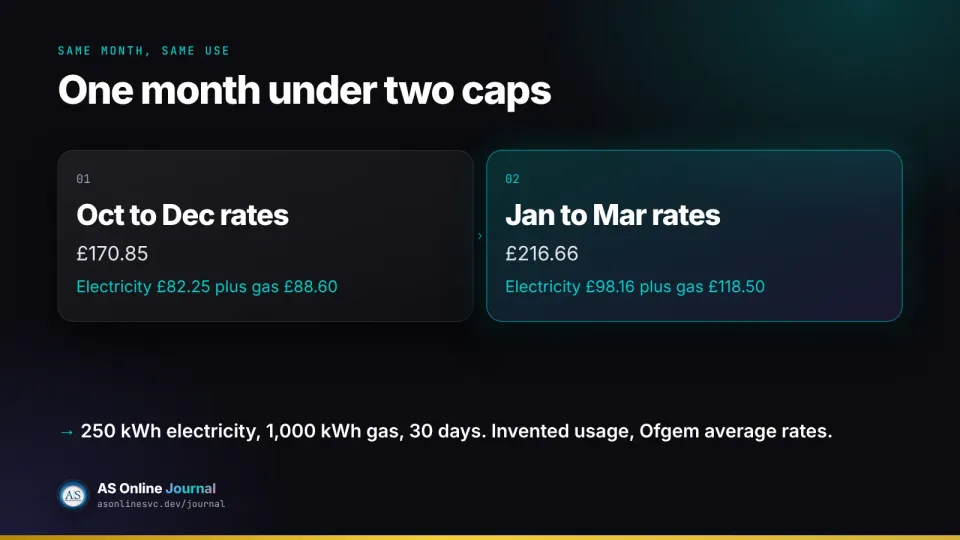
Together that is £170.85 at the October rates and £216.66 at the January rates: about £46 more for the same use, or roughly 27%. The usage figures are invented to show the arithmetic. Your use, region and payment method will give different numbers, and a real bill may also include credits, discounts or debt repayments.
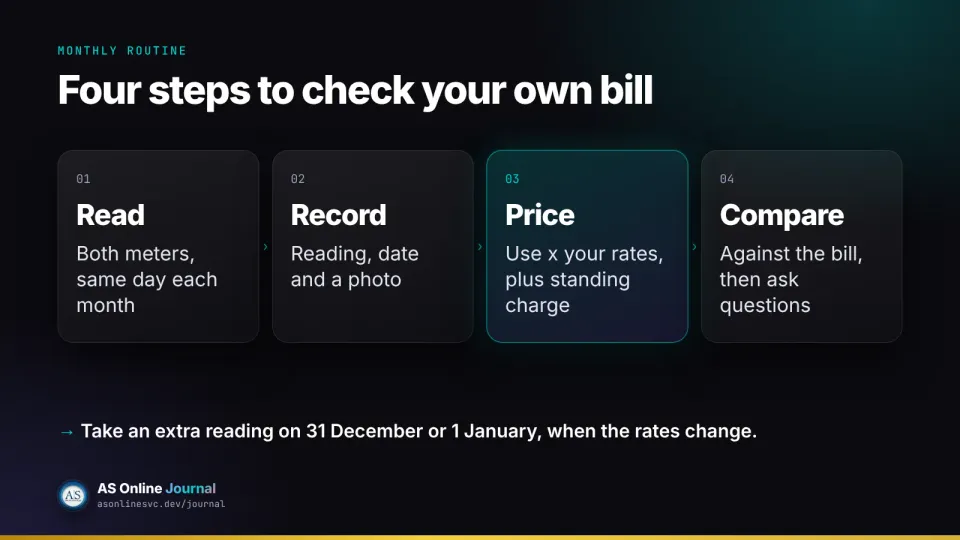
If you do not give your supplier readings, they estimate. Citizens Advice warns that an estimate can be too low or too high, and gives a simple example: skip readings in summer and you may get an estimated bill based on winter use. With rates changing on 1 January, an estimate that straddles the change is harder to check by eye.
Smart meters normally send readings automatically, but Citizens Advice says that if the word "estimated" or an "E" appears next to the readings on your bill, your meter is probably not sending them, and you should take readings yourself and send them once a month.
You can do all of this in a notebook or a spreadsheet you build yourself. If you would like it ready-made, we sell the Winter Energy Bill Tracker for £4. It is our own product: a UK gas and electricity spreadsheet where you type your meter readings and your own tariff rates, and it works out kWh, estimated cost, cost per day and a running balance. It has a Bill check tab for recalculating one bill, and separate VAT settings for gas and electricity. No rates are filled in for you, so it needs the figures from your own bill. It does not handle two-rate (day and night) electricity meters, and it is a record-keeping aid, not financial advice. See the Winter Energy Bill Tracker on Gumroad.
Figures were checked against Ofgem's published pages on 25 November 2026, the day of the announcement. This guide is general information, not financial or energy advice.
No. Ofgem says the cap limits the unit rates and standing charges suppliers can charge on default tariffs. It does not set a maximum total bill, so what you pay still depends on how much energy you use.
Not while your fixed deal lasts. Ofgem says around 10 million households on fixed tariffs are not affected by this increase while their fixed deal remains in place. The cap applies to default (standard variable) tariffs.
Citizens Advice says to send a reading once a month if you do not have a smart meter working in smart mode, so that bills stay accurate. Smart meters normally send readings automatically.
energy-bills price-cap meter-readings household-budget guide